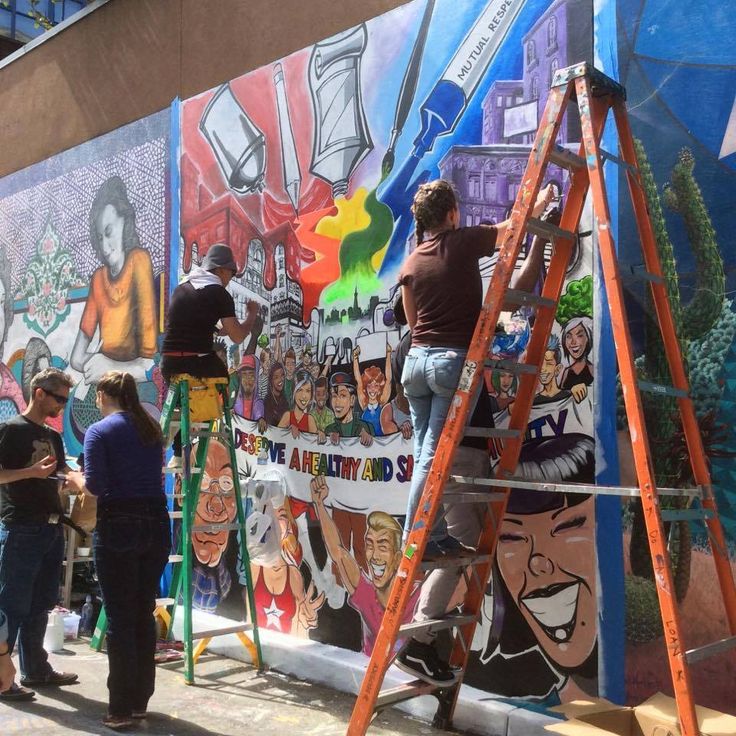
How a mural actually gets made, start to finish
Nine days on a wall, in order, including the two days nobody expects.

Nadine Vela
Founder & Muralist at Articulate
Most people picture a mural as somebody turning up with paint and climbing a ladder. The painting is the shortest part of the job. Here is what nine days on a forty-foot wall actually looked like, in order, using the Two Birds side wall as the example.
Days one and two: nobody paints
We washed the wall, cut out two areas of failed pointing, and primed in three stages. Ninety-year-old brick drinks the first coat completely and gives nothing back.
This is the part clients find hardest to accept, and the part that decides whether the mural is still there in ten years. What you are actually paying for on day one is the next decade.
Skip it and the finest painting in the city will be flaking within two winters.
Day three: drawing at full size
The approved sketch went up in charcoal at four metres, and roughly a third of it changed on the wall. A heron’s neck that curved beautifully on paper looked broken at full scale.
Every mural gets redrawn on the wall. Anybody who tells you the sketch transfers cleanly has not painted one.
Days four to seven: blocking in, then the detail
Big shapes first, in flat colour, working top down so nothing drips onto finished work. By the end of day five it looks worse than the sketch and every client quietly panics.
Day six is when it turns. Shadows go in, edges tighten, and a piece that looked flat suddenly has depth in it.
Day eight: the part nobody sees
Two coats of anti-graffiti seal. It is the least interesting day of the job and, across ten years, easily the most important.
It means a tagged wall can be washed rather than repainted, and it holds the colour against coastal weather and direct sun.
Day nine: standing across the road
The last day is spent thirty metres back, walking up and down, fixing the four things that only show up at a distance.
Then we photograph it in the morning light, hand over the drawings, and let the street decide.
